
Shrubs · Camellias
Sasanqua Camellia 'Crimson N'
Camellia sasanqua 'Crimson n' clover'
In USDA zones 7b–8a around Raleigh, Durham, and Cary, Sasanqua Camellia 'Crimson N' is a shrub used in Triangle yards when mature size, sun, and drainage fit the bed. Piedmont clay rewards a wide planting hole, a slightly high crown, and steady first-season water. It shows up on shadier lots where turf struggles. Seasonal flowers are usually why it earns a street-facing spot. Fall planting is the usual window here; water through the first summer no matter the calendar.
Add to plant request
Choose a container size to add this plant to your request. We confirm pricing and live stock before invoicing.
Key facts for the Triangle
- Botanical name
- Camellia sasanqua 'Crimson n' clover'
- Common name
- Sasanqua Camellia 'Crimson N'
- Plant type
- Shrubs
- Group
- Camellias
- Hardiness here
- USDA 7b–8a (Raleigh–Durham Triangle)
- Light
- Shade to part shade
- Water
- Deep, consistent water while establishing
- Soil
- Well-drained; prefers acidic soil
- Leaf habit
- Evergreen
- Best planting window
- Fall (October–November) in the Piedmont; spring after frost as backup
Overview
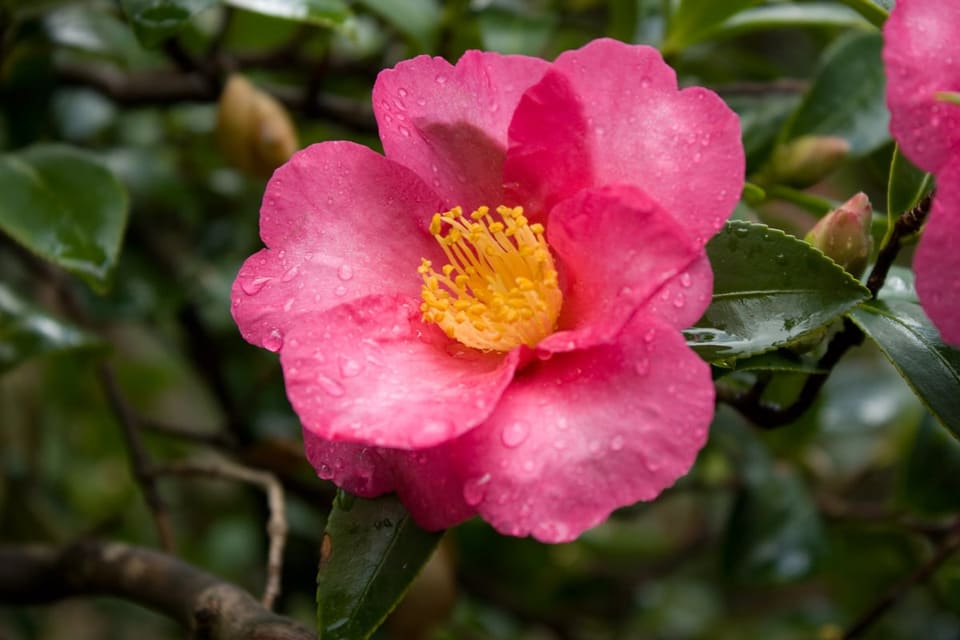
Crimson N Clover is a Camellia sasanqua selected for deep crimson fall flowers against glossy evergreen leaves.
Give it sun to part shade and acidic soil that drains after storms. Dark blooms pop near light brick or pale gravel.
Plant slightly high in clay, mulch the root zone, and prune after bloom if you need clearance.
At a glance
Sun
Water & soil
Flowers & fragrance
Foliage & season
Habit & use
Best landscape uses
Best landscape uses
Growing & care
Practical notes for establishment and seasonal care in the Triangle—adjust for local soil tests and microclimate.
Light
Sasanquas take more sun than japonicas—full morning sun to light afternoon shade is ideal in Raleigh–Durham. Deep shade means fewer fall flowers.
Watering Procedure
Water deeply at the base until the root zone is saturated (about 45–60 seconds for new plants). Check the top inch of soil; if dry, water again. First-season consistency beats infrequent deep soaks that leave the crown wet.
Planting & Soil
Open a wide hole in Piedmont clay, amend with compost, and plant slightly high. Acidic pine-bark or leaf mulch (not piled on the stem) keeps roots cooler and moisture even.
Fertilization
A light spring feeding with acid-loving shrub fertilizer is enough for most Triangle soils. Compost in the mulch ring helps more than frequent liquid feeds.
Pruning / upkeep
Prune after the fall/winter bloom finishes—usually late winter—before spring flush. They shear into informal hedges better than japonicas, but leave room for the natural outline.
Bloom season & size
Expect flowers from mid-fall into early winter when many shrubs are done. Many cultivars stay 4–8 ft; dwarfs and spillers are useful near walks and under windows.
Companions & install tips
Good with tea olive, loropetalum, hollies, and evergreen groundcovers that share sun-to-part-shade beds. Use for foundation structure or a loose screen. Fall install gives roots a head start before summer heat.
Common questions
Is Sasanqua Camellia 'Crimson N' a good plant for Raleigh and the Triangle?
Yes—when the site matches its light and drainage needs. Sasanqua Camellia 'Crimson N' is used in Raleigh, Durham, and Cary landscapes in USDA zones 7b–8a. Confirm mature width, overhead wires, and how wet the Piedmont clay stays after storms before you plant.
When should I plant Sasanqua Camellia 'Crimson N' in North Carolina?
Fall (October–November) is the safest window for Sasanqua Camellia 'Crimson N' in the Piedmont: soil is still warm, air is cooler, and roots can grow before summer. Spring after the last frost works if you can water deeply through the first hot season.
Will Sasanqua Camellia 'Crimson N' grow in Piedmont clay?
It can, with careful planting: wide hole, crown slightly above grade, and no water sitting on the root flare. Heavy, poorly drained clay is the usual failure mode—not summer heat alone.
Does Sasanqua Camellia 'Crimson N' lose its leaves in winter?
No. Sasanqua Camellia 'Crimson N' is evergreen and keeps foliage year-round, which is why it is used for winter structure and screening in Triangle yards.
How much sun does Sasanqua Camellia 'Crimson N' need?
It performs best in full sun—about 6 or more hours of direct light. Afternoon shade can help in reflected-heat courtyards, but too little sun usually means weaker flowering or open growth.
Reference context includes Wikipedia (“Camellia sasanqua”), licensed under CC BY-SA.