
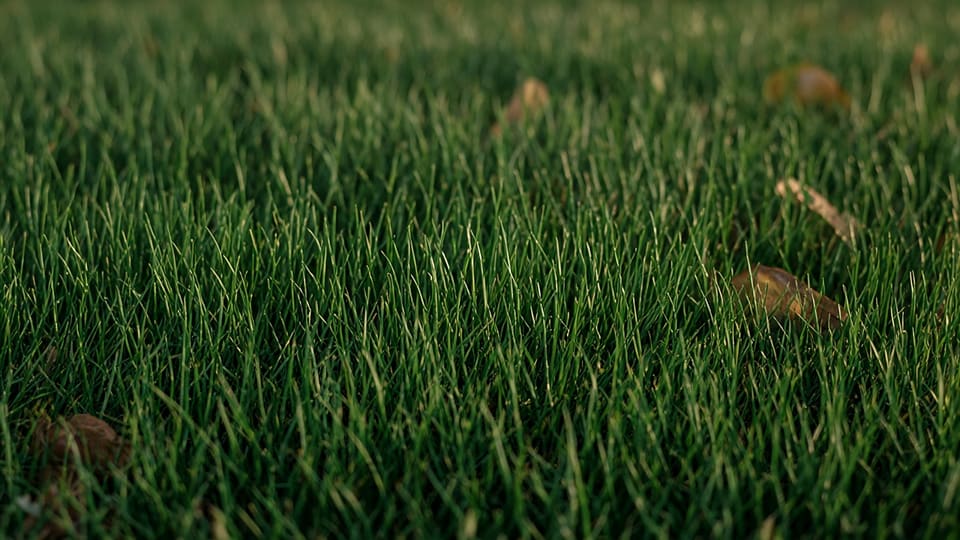
Roots first: Cooler air and still-warm soil help new sod root deeply before summer heat arrives.
Fall is for Fescue
Tall Fescue for the Triangle
Tall fescue stays green through winter when Bermuda turns tan. It handles mixed light, roots best in fall and winter, and gives Piedmont yards the cool-season color many homeowners want.
Mixed lightnot full-sun only
3–5 inmowing height
Fall–Winterbest install windows
Greenthrough winter
Why timing matters
Why fall is the right window
Winter color: Tall fescue stays green through Triangle freezes, while Bermuda, zoysia, and centipede go dormant and tan.
A better first summer: A lawn that rooted through fall and winter is farther along by July than one installed in spring.
What is tall fescue?
Tall fescue is a cool-season grass that stays active in fall and winter and can keep a deep green look when warm-season lawns go dormant. In the Piedmont, it is a strong choice if you want winter color and more shade tolerance than Bermuda or zoysia usually offer.
What fescue does well
- Winter color: Stays green while Bermuda, Zoysia, and Centipede go dormant.
- Mixed light: Handles dappled shade better than most warm-season options. It does not need six hours of direct sun.
- Familiar look: Fine-to-medium texture that suits most residential yards.
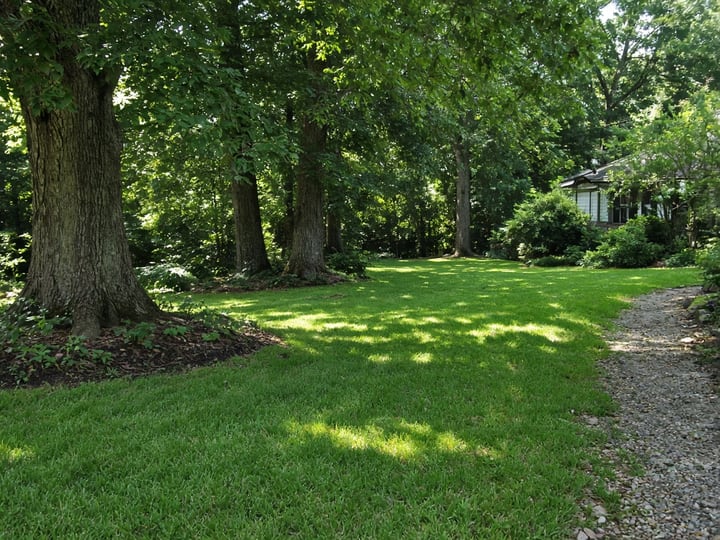
Fall through winter
Why install fescue in fall or winter?
Fall and winter are the best install windows. Fall is usually best: soil can still be warm while the air is easier on a cool-season lawn. Winter is slower, not closed—new sod can root when the ground is workable and you keep moisture even.
- Cold is manageable: tall fescue is made for cool-season growth and normally stays green through Triangle freezes. Growth slows in deep cold, so expect rooting more than a big flush of top growth.
- Cool nights help roots: the lawn can settle into clay without fighting heat from day one.
- Winter care is simple: keep traffic off wet or frozen soil, mow only when needed, and do not worry when top growth pauses. Mild weather brings it back.
- Summer comes later in the process: a fall- or winter-rooted lawn has months to establish before hard heat. Spring installs rarely get that head start.
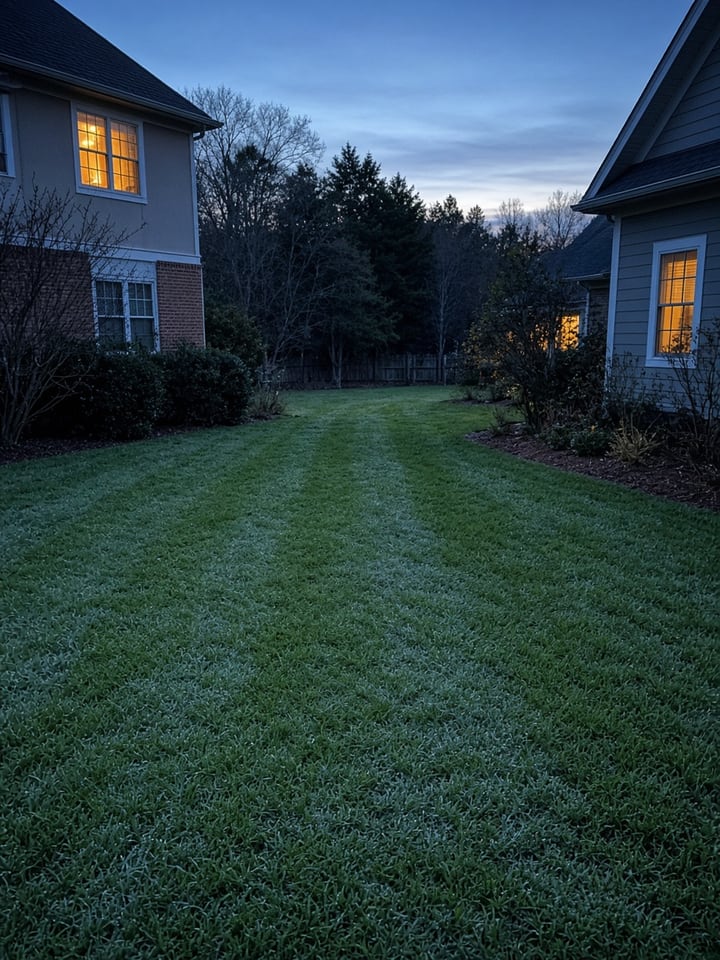
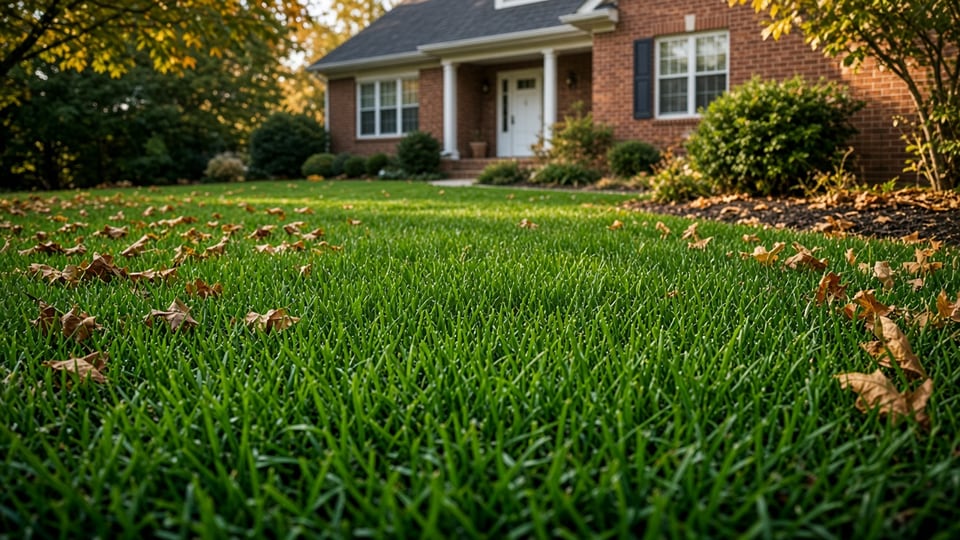
When warm-season lawns on the street go tan, fescue is still green.
What we install
Why we use Pennington Signature Ultra
Our standard tall fescue is Pennington Signature Ultra—a three-variety cool-season blend suited to the Triangle transition zone. Three cultivars share the job for color, density, and wear. Soil prep and watering still matter as much as the blend itself.
Pennington Signature Ultra
A lower-growing, dark-green tall-fescue blend for mixed light, winter color, and a traditional residential lawn. Mow at 3–5 inches. It needs prepared soil, even coverage, and a summer watering plan.
Three-variety blend Mixed light Winter green
The three grasses in the blend
Signature Ultra is a blend, not one cultivar. It combines Penn1901, Justice, and Rebel Exeda—turf-type tall fescues chosen for color, density, and performance in our transition zone.
Penn1901
Fine texture and strong overall turf quality. Helps the blend stay dense and even in Triangle conditions.
Justice
Known for persistence and wear tolerance. Helps when kids, pets, and summer stress put pressure on the lawn.
Rebel Exeda
Dark color and solid transition-zone performance. Supports the deep green look most homeowners want from fescue.
How the other grasses compare
Tifway 419 Bermuda
Best for full sun, summer heat, heavy traffic, and quick repair. It goes dormant and tan in winter and is a poor fit for deep shade.
Full sunSelf-repairing
Compadre Zoysia
Dense and durable, with a more refined summer look than common Bermuda. Needs sun and time to knit together.
Dense & durableNeeds sun
Zeon Zoysia
Fine-bladed with a softer finish. Slower and more expensive to establish, and it still needs useful sun.
Fine bladeSoft finish
Common Centipede
A lower-input warm-season option for sunny yards. Slower, lighter green, and not a shade fix.
Low inputSunny yards
Five practices that matter
How to keep fescue looking good
- Match the light: mixed light and dappled shade are fine. Deep, all-day shade under a dense canopy is still too dark for sod.
- Prepare the soil: relieve compaction, fix drainage issues, and finish a smooth surface roots can grow into.
- Mow at 3–5 inches: keep the blade sharp, and stay toward the taller end when summer stress builds.
- Water deeply, not constantly: once established, soak the root zone and let the surface dry between cycles.
- Fertilize in season: fall is the main growth and recovery window. Avoid pushing soft growth in summer heat.
How an install works
Our fall installation plan
Four clear steps—from reading the site to protecting the first rooting weeks—so the lawn has a fair start.
-
Evaluate the yard
We look at sun and shade, clay, drainage, and whether irrigation can reach every area. The site sets the plan.
-
Prepare the bed
Grade away from the house, loosen compacted fill, and finish a smooth surface the sod can root into. Prep is half the job.
-
Install fresh sod
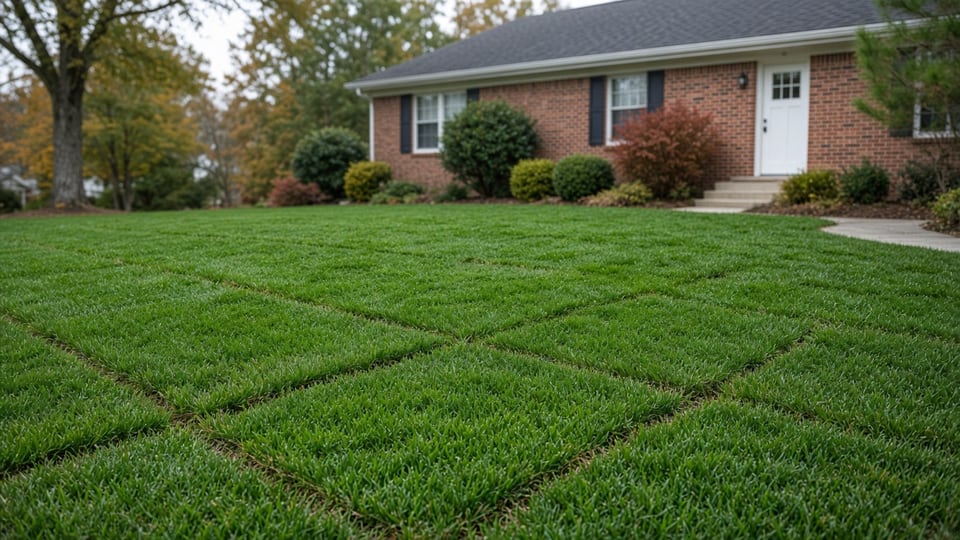
Farm-direct sod on install day. Seams are staggered, the lawn is rolled for soil contact, and the first deep watering starts before we leave.
-
Protect the rooting weeks
Mow at 3–5 inches, water to the roots, and follow your town’s watering rules. Steady care beats overwatering.
Through the year
A simple fescue calendar
Fall
Best install season. Lay sod or overseed, keep seams moist, and focus on rooting.
Winter
Still a good install window for sod. Mow only as needed, protect wet soil, and enjoy the green.
Spring
Watch growth and weeds. Do not overfertilize or cut too short before summer.
Summer
Hold 3–5 inches, watch dry edges, and water early when local rules allow.
A short break
Needle Sweep
Pine needles smother new fescue. Tap tiles to clear the litter before a patch browns out—survive the fall drop and keep the stand green.
Cleared0
Green patches3
Best on this device0
Ready when you are.
Tap needle piles as they land. Miss three smothered patches and the lawn gives out.
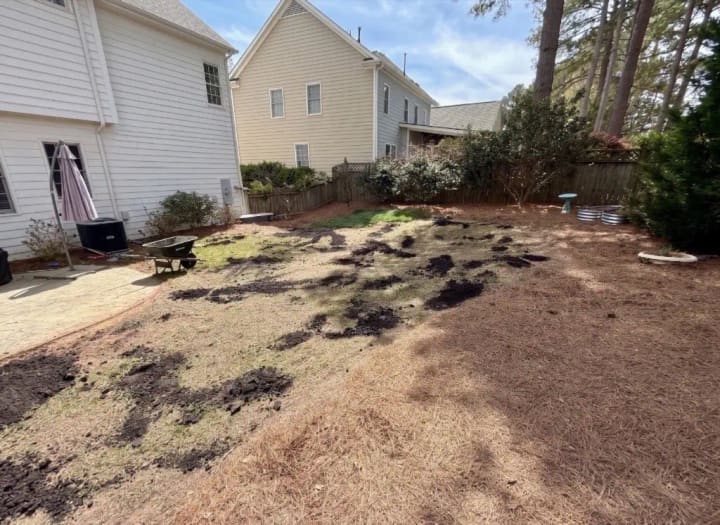
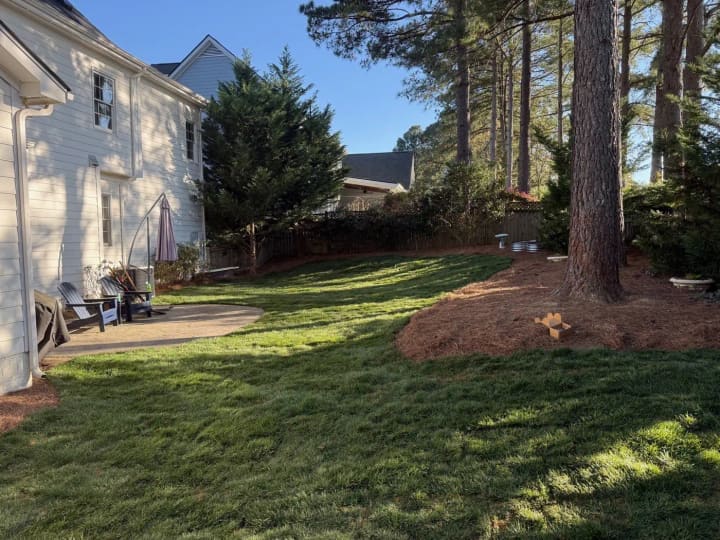
A real yard, not a stock photo
Good fescue starts with the groundwork.
Site preparation, grading, and careful watering are what turn a hard, pine-shaded yard into a lawn that holds up.
Common questions
Tall fescue FAQs
Is tall fescue good for Raleigh and Durham?
Yes. It fits the Triangle’s cool winters and mixed-light yards. Plan on summer watering, and skip it for deep, all-day shade.
When is the best time to install fescue?
Fall and winter. Fall is usually best; winter sod installs work when the ground is workable. Spring is possible; summer is the hardest time.
How much sun does fescue need?
It does not need six hours of direct sun. Mixed light and dappled shade are fine. Dense canopy with almost no sun is better served by beds or groundcover than sod.
What is in Pennington Signature Ultra?
Three turf-type tall fescues: Penn1901, Justice, and Rebel Exeda. Together they support fine texture, wear tolerance, dark color, and transition-zone performance. A blend is usually more forgiving than a single older cultivar.
What does each grass in the blend do?
Penn1901 supports fine texture and overall turf quality. Justice adds persistence and wear tolerance. Rebel Exeda supports dark green color and transition-zone toughness. The blend is meant so one variety is not carrying the whole lawn.
How tall should I mow Signature Ultra fescue?
Keep it between 3 and 5 inches. Taller is better as summer stress builds. Do not scalp it down to warm-season heights.
Is fescue a fit for your yard?
Fescue is a strong choice for mixed light, winter color, and a traditional lawn look. It is not no-maintenance: summer watering, a 3–5 inch cut, and brown-patch awareness still matter.
Want a plan for your yard?
We match the grass and installation plan to your site—sun, shade, soil, and watering—not a one-size-fits-all offer.