
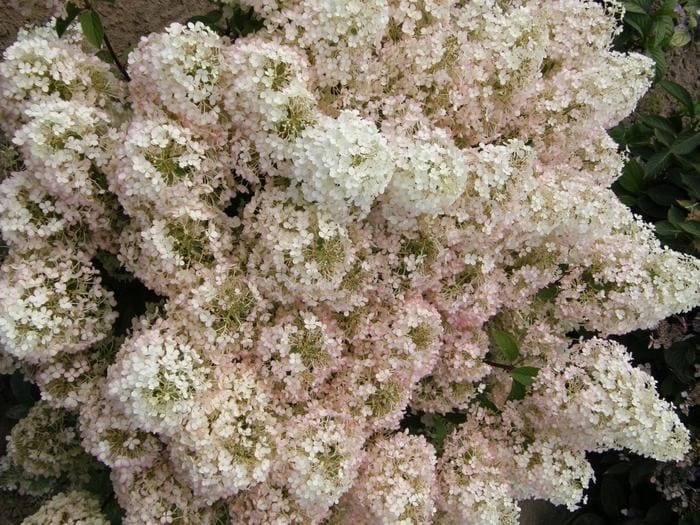
Shrubs · Hydrangeas
Sweet Starlight(TM) Hydrangea
Hydrangea paniculata 'Pan1782hydr' ppaf
In USDA zones 7b–8a around Raleigh, Durham, and Cary, Sweet Starlight(TM) Hydrangea is a shrub used in Triangle yards when mature size, sun, and drainage fit the bed. Piedmont clay rewards a wide planting hole, a slightly high crown, and steady first-season water. Seasonal flowers are usually why it earns a street-facing spot. Fall planting is the usual window here; water through the first summer no matter the calendar.
Add to plant request
Choose a container size to add this plant to your request. We confirm pricing and live stock before invoicing.
Key facts for the Triangle
- Botanical name
- Hydrangea paniculata 'Pan1782hydr' ppaf
- Common name
- Sweet Starlight(TM) Hydrangea
- Plant type
- Shrubs
- Group
- Hydrangeas
- Hardiness here
- USDA 7b–8a (Raleigh–Durham Triangle)
- Light
- Part sun / part shade
- Water
- Even moisture; do not let the root ball dry out
- Soil
- Well-drained
- Leaf habit
- See overview
- Best planting window
- Fall (October–November) in the Piedmont; spring after frost as backup
Overview
Hydrangea Paniculata 'Pan1782hydr' Ppaf (Hydrangea Paniculata 'Pan1782hydr' Ppaf) is a shrubs selected for its ornamental value and landscape performance.
It is a reliable choice for seasonal flower display in the Triangle. Between the clay soil and humid summers, this shrub stands out for its part sun / part shade and overall landscape durability.
At a glance
Sun
Water & soil
Flowers & fragrance
Best landscape uses
Best landscape uses
Growing & care
Practical notes for establishment and seasonal care in the Triangle—adjust for local soil tests and microclimate.
Light
Part sun / part shade
Watering Procedure
Maintain consistent moisture, especially during establishment and July/August heat. Water slowly at the base for at least a minute to ensure the root ball doesn't dry out.
Planting & Soil
In our heavy Raleigh clay, this is a great performer if you prep the soil well. Dig your hole twice as wide as the root ball but no deeper. Mix 30% compost with your native clay backfill to open up the soil—this helps the roots breathe and prevents water from pooling. Planting 'slightly high' also ensures the roots stay healthy.
Fertilization
Use a fertilizer designed for acid-loving plants in spring. In the Raleigh area, a light application of compost can also help buffer our native soil pH.
Pruning / upkeep
Prune shortly after the flowers fade. This ensures you aren't cutting off the buds for next year's bloom cycle.
Common questions
Is Sweet Starlight(TM) Hydrangea a good plant for Raleigh and the Triangle?
Yes—when the site matches its light and drainage needs. Sweet Starlight(TM) Hydrangea is used in Raleigh, Durham, and Cary landscapes in USDA zones 7b–8a. Confirm mature width, overhead wires, and how wet the Piedmont clay stays after storms before you plant.
When should I plant Sweet Starlight(TM) Hydrangea in North Carolina?
Fall (October–November) is the safest window for Sweet Starlight(TM) Hydrangea in the Piedmont: soil is still warm, air is cooler, and roots can grow before summer. Spring after the last frost works if you can water deeply through the first hot season.
Will Sweet Starlight(TM) Hydrangea grow in Piedmont clay?
It can, with careful planting: wide hole, crown slightly above grade, and no water sitting on the root flare. Heavy, poorly drained clay is the usual failure mode—not summer heat alone.
Does Sweet Starlight(TM) Hydrangea prefer sun or shade?
Part sun or part shade is the usual fit. Morning sun with afternoon protection is often ideal in hot Piedmont summers.