
Trees · Maples
Maple 'Lemon Lime Lace'
Acer palmatum var. dissectum 'Lemon lime lace'
In USDA zones 7b–8a around Raleigh, Durham, and Cary, Maple 'Lemon Lime Lace' is a tree used in Triangle yards when mature size, sun, and drainage fit the bed. Piedmont clay rewards a wide planting hole, a slightly high crown, and steady first-season water. Fall planting is the usual window here; water through the first summer no matter the calendar.
Add to plant request
Choose a container size to add this plant to your request. We confirm pricing and live stock before invoicing.
Key facts for the Triangle
- Botanical name
- Acer palmatum var. dissectum 'Lemon lime lace'
- Common name
- Maple 'Lemon Lime Lace'
- Plant type
- Trees
- Group
- Maples
- Hardiness here
- USDA 7b–8a (Raleigh–Durham Triangle)
- Light
- Part sun / part shade
- Water
- Deep, consistent water while establishing
- Soil
- Well-drained
- Leaf habit
- See overview
- Best planting window
- Fall (October–November) in the Piedmont; spring after frost as backup
Overview
Acer palmatum, commonly known as Japanese maple, palmate maple, or smooth Japanese maple, is a species of woody plant native to Korea, Japan, China, eastern Mongolia, and far eastern Russia.
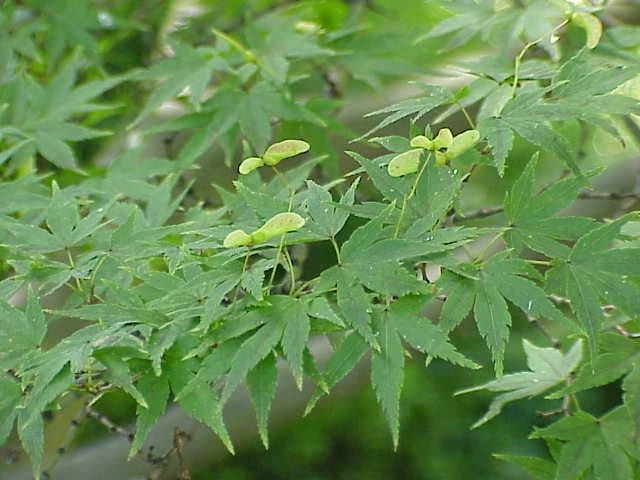
It is a reliable choice for fall color in the Triangle. Between the clay soil and humid summers, this tree stands out for its gold / chartreuse foliage and overall landscape durability.
At a glance
Sun
Water & soil
Foliage & season
Best landscape uses
Best landscape uses
Growing & care
Practical notes for establishment and seasonal care in the Triangle—adjust for local soil tests and microclimate.
Light
Part sun / part shade
Watering Procedure
Provide steady, deep watering during the establishment phase. Aim for a slow soak at the base rather than a quick surface sprinkle.
Planting & Soil
Thrives in well-drained soil. Dig your hole twice as wide as the root ball but no deeper. Mix 30% compost with your native clay backfill to open up the soil—this helps the roots breathe and prevents water from pooling. Planting 'slightly high' also ensures the roots stay healthy.
Fertilization
Apply a light, slow-release balanced fertilizer in early spring if the plant shows signs of nutrient need; avoid heavy nitrogen on newly planted material.
Pruning / upkeep
Prune only as needed for structure or clearance. In our humid climate, thin out internal crossing branches to improve air circulation.
Common questions
Is Maple 'Lemon Lime Lace' a good plant for Raleigh and the Triangle?
Yes—when the site matches its light and drainage needs. Maple 'Lemon Lime Lace' is used in Raleigh, Durham, and Cary landscapes in USDA zones 7b–8a. Confirm mature width, overhead wires, and how wet the Piedmont clay stays after storms before you plant.
When should I plant Maple 'Lemon Lime Lace' in North Carolina?
Fall (October–November) is the safest window for Maple 'Lemon Lime Lace' in the Piedmont: soil is still warm, air is cooler, and roots can grow before summer. Spring after the last frost works if you can water deeply through the first hot season.
Will Maple 'Lemon Lime Lace' grow in Piedmont clay?
It can, with careful planting: wide hole, crown slightly above grade, and no water sitting on the root flare. Heavy, poorly drained clay is the usual failure mode—not summer heat alone.
Does Maple 'Lemon Lime Lace' prefer sun or shade?
Part sun or part shade is the usual fit. Morning sun with afternoon protection is often ideal in hot Piedmont summers.
Reference context includes Wikipedia (“Acer palmatum”), licensed under CC BY-SA. Reference image source: Acer palmatum.
